
Roulette strategy starts with the wheel
The most effective roulette strategy is to play a single-zero wheel. European roulette has a 2.70% house edge, American roulette has 5.26%, and French roulette with La Partage cuts even-money bets to 1.35%. The wheel you choose matters more than any system.
Roulette is pure chance. The ball lands in one of 37 pockets on a European wheel, or 38 on an American wheel, and every pocket is equally likely. No pattern, streak or scoreboard can shift those odds.
What you can control is the price of each spin. That price is the house edge, and it depends on the wheel rules. After that, you control how much you stake and how long you play. That is the whole of it, and it is why this roulette strategy guide spends most of its time on the numbers.
European, American and French roulette compared
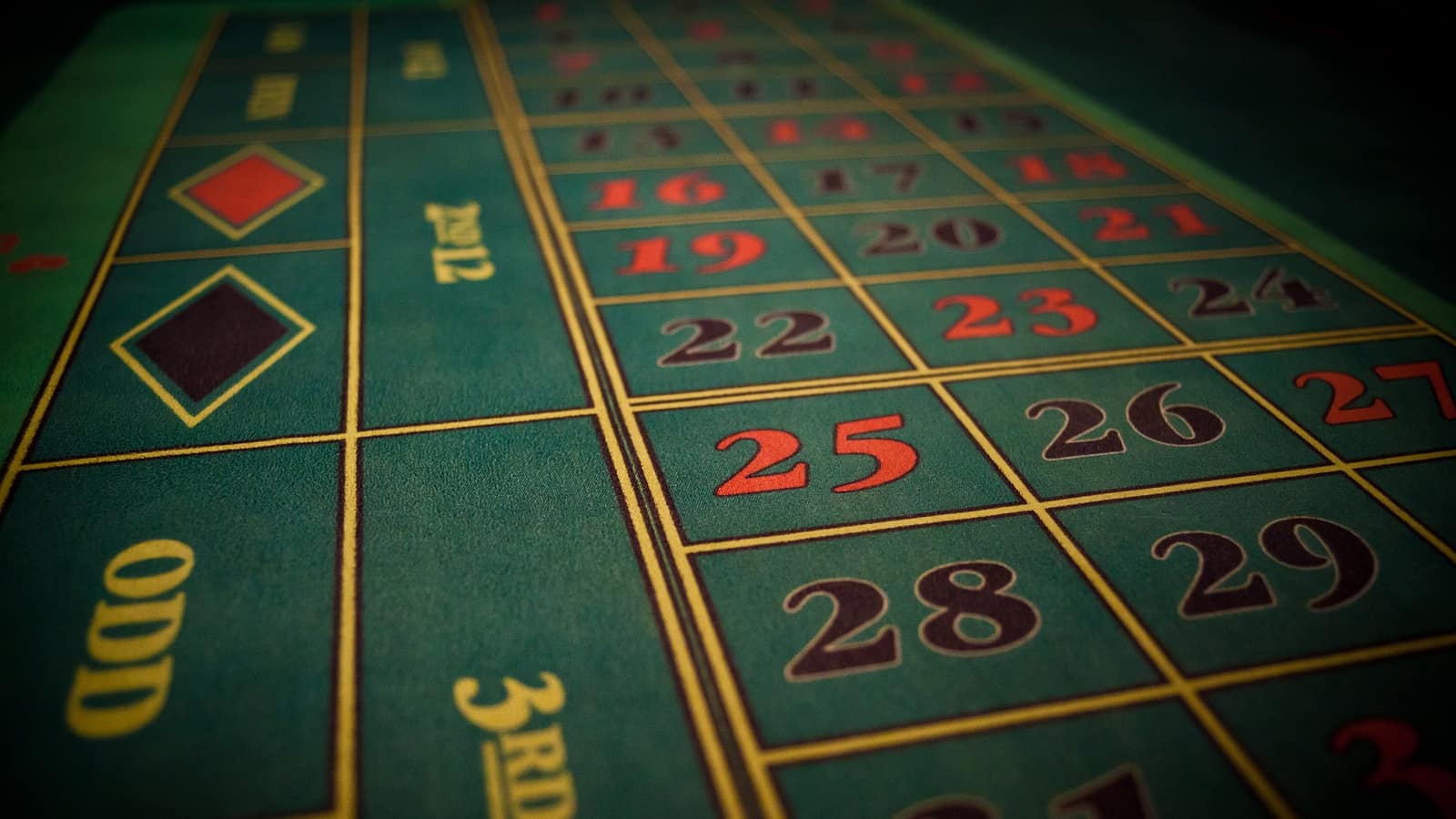
Three versions dominate online lobbies. They share the same layout of numbers 1 to 36, but differ in the zeros and in what happens when the ball lands on them.
| Version | Pockets | Zeros | Even-money bet edge | All other bets |
|---|---|---|---|---|
| European | 37 | One (0) | 2.70% | 2.70% |
| American | 38 | Two (0, 00) | 5.26% | 5.26% (five-number bet 7.89%) |
| French with La Partage | 37 | One (0) | 1.35% | 2.70% |
| French with En Prison | 37 | One (0) | About 1.4% | 2.70% |
The extra zero on the American wheel is the entire difference. Payouts stay the same, so the casino simply gets paid for the additional pocket. A 100 stake costs you about 2.70 per spin on average at a European wheel, and about 5.26 on an American one.
French roulette keeps the single zero and adds a rule for even-money bets. With La Partage, you get half your stake back if the ball lands on zero. With En Prison, your stake is held for the next spin and returned if it wins. Both cut the edge on those bets in half, to about 1.35%.
Many casinos label tables "French roulette" but run it without La Partage. Check the rules panel before you play. You can also compare lobbies in our online roulette hub.
Roulette bets and payouts
Every bet on a given wheel has the same edge, because payouts are set to match the odds, minus the zero. That means a roulette strategy based on "better" bets does not hold up. The difference is variance, not cost.
| Bet | Numbers covered | Payout | Chance of winning (37 pockets) |
|---|---|---|---|
| Straight up | 1 | 35:1 | 2.70% |
| Split | 2 | 17:1 | 5.41% |
| Street | 3 | 11:1 | 8.11% |
| Corner | 4 | 8:1 | 10.81% |
| Six line | 6 | 5:1 | 16.22% |
| Dozen or column | 12 | 2:1 | 32.43% |
| Red/black, odd/even, high/low | 18 | 1:1 | 48.65% |
Outside bets such as red or black win nearly half the time, so your balance moves slowly. Inside bets such as straight up hit rarely, but pay a lot when they do. If you stake 10 on a single number, you should expect to lose it about 36 spins out of 37, and a win returns 350 plus your stake.
The five-number bet on the American wheel (0, 00, 1, 2, 3) pays 6:1 and carries a 7.89% edge, the worst bet on any standard table. Skip it.
Why roulette systems fail
Every betting system rests on the same hope: that you can rearrange wins and losses so the losses are smaller. You cannot. The house edge applies to every spin, so the total expected loss is your total amount staked, multiplied by the edge.
A system changes the shape of the result, not its average. Martingale produces many small wins and a rare, large loss. Paroli produces many small losses and a rare, larger win. Both average out to the same expected cost, minus table limits that make the Martingale worse.
Roulette betting systems you will meet include:
- Martingale. Double the stake after every loss.
- Reverse Martingale or Paroli. Double after every win, then reset.
- Fibonacci. Move along the sequence 1, 1, 2, 3, 5, 8 after losses.
- D'Alembert. Raise by one unit after a loss, lower by one after a win.
- Labouchère. Cross off numbers from a written list of targets.
None changes the odds of the next spin. Each also needs a larger bankroll than most players expect.
The Martingale table: how fast stakes escalate
The Martingale is the most popular system, and its failure is easy to show. Start with a 10 unit bet on red, and double after each loss. A single win then returns your total losses plus 10 profit.
| Consecutive losses | Next stake | Total lost so far | Chance of that streak (European) |
|---|---|---|---|
| 1 | 20 | 10 | 51.35% |
| 2 | 40 | 30 | 26.37% |
| 3 | 80 | 70 | 13.54% |
| 4 | 160 | 150 | 6.95% |
| 5 | 320 | 310 | 3.57% |
| 6 | 640 | 630 | 1.83% |
| 7 | 1,280 | 1,270 | 0.94% |
| 8 | 2,560 | 2,550 | 0.48% |
| 9 | 5,120 | 5,110 | 0.25% |
| 10 | 10,240 | 10,230 | 0.13% |
The last column shows the chance of the first n spins all losing. Eight losses sounds remote, at about 0.5% per sequence, yet you may run many sequences in a session. Meanwhile, each winning sequence only earns 10.
Now add a table limit. Many tables cap even-money bets at 500 or 1,000. With a 10 base stake and a 500 limit, you can only double up to 320, so after six straight losses the system stops working, and you are 630 down. That is 63 winning sequences wiped out by one bad run.
The conclusion is not that the system never wins. It wins often, but the rare loss is large enough to cancel all the gains, and then some. On an American wheel, the streaks are even likelier.
How much does a roulette session cost?
Expected loss is simple to estimate. Multiply your total amount staked by the house edge. Staking 10 per spin for 100 spins puts 1,000 through the wheel. On a European table, the expected loss is 27. On an American table, it is 52.60.
Real results swing far from that. Over 100 spins, you may be well ahead or well behind, which is variance. As the number of spins increases, the average closes in on the edge.
Speed counts too. A live dealer wheel often runs roughly 25 to 40 spins an hour. An RNG wheel can run faster if you let it. More spins per hour means more money through the wheel, and a larger expected cost.
Bankroll rules for roulette strategy
A flat staking plan is the sensible approach for the vast majority of players. It keeps losses predictable and removes the temptation to chase.
- Set a session budget you can afford to lose.
- Divide it into at least 50 units, so a single stake is around 2% of the budget.
- Stake one unit on every spin, whatever happened last.
- Walk away at your loss limit, or when you reach a modest target.
Flat betting does not improve your odds. It simply keeps your stake small relative to the bankroll, so you play longer for the same expected cost. Our casino bankroll management guide covers loss limits and time limits in more depth, and our house edge explained page puts roulette next to other games.
Common roulette myths
Plenty of folklore surrounds the wheel. A few popular claims deserve a straight answer.
- "Black is due." The wheel has no memory, so previous spins never change the next.
- "Hot and cold numbers." Short streaks occur in any random series. Over a short sample, some numbers will look hot, and nothing predicts the next.
- "Neighbour bets beat the odds." Call bets such as Voisins du Zéro cover groups of numbers on the wheel, but each chip still carries the same edge.
- "Online roulette is rigged." Licensed RNG games are tested by independent labs such as eCOGRA and GLI, and live games use a real wheel on camera.
A short roulette strategy checklist
Choose a single-zero wheel
Pick European or French roulette over American whenever you have the choice.
Look for La Partage or En Prison
French tables that return part of an even-money stake on zero have the lowest edge.
Set a budget and a unit
Divide your session budget into at least 50 units and stake one unit per spin.
Pick bets for the swing you want
Choose even-money bets for steady play or inside bets for rarer, bigger wins.
Stop at your limit
Leave the table when you hit your loss or time limit, whatever the recent spins did.
Seen honestly, roulette strategy comes down to three disciplines: pick the best wheel, stake small, and stop on time. To find tables, see our casino reviews, which list which providers each casino carries. If play stops being fun, GamCare provides free support.
Frequently asked questions
What is the best bet in roulette?
On a European wheel, every standard bet carries the same 2.70% house edge, so none is mathematically best. Even-money bets lose less often per spin, while straight-up numbers swing more. On a French wheel with La Partage, even-money bets drop to a 1.35% edge, which makes them the best value on the table.
Is European roulette better than American roulette?
Yes. The American wheel adds a double zero, so it has 38 pockets instead of 37. That doubles the house edge from 2.70% to 5.26%, with no change in payouts. Choose a single-zero wheel whenever the lobby gives you the choice, because you lose about half as much per spin on average.
Does the Martingale system work in roulette?
It wins small amounts most of the time, but it cannot change the house edge. Seven straight losses on red or black happen about once in every 106 starts, and they push the next stake past 1,200 on a 10 unit base. Table limits and your bankroll cap the doubling, so the system eventually produces a large loss.
Can I predict the next number from previous spins?
No. A fair wheel has no memory, so every spin is independent. Red coming up five times in a row does not make black more likely. Thinking it does is called the gambler's fallacy. Online RNG roulette and live wheels both behave this way.
What are La Partage and En Prison?
Both are French roulette rules that soften the zero. With La Partage, you lose only half your even-money stake when the ball lands on zero. With En Prison, the stake stays on the table for another spin and is returned if it wins. Both cut the house edge on even-money bets to roughly 1.35%.
How much should I stake per spin?
Set a session budget first, then divide it into at least 50 units, so a stake equals about 2% of your bankroll. Smaller units let you survive normal variance. See our bankroll management guide for a worked plan.