Sic bo rules and how to play: the basics
Under the sic bo rules, you place chips on a betting layout, then three dice are rolled. Bets win if the dice match your pick, whether that is a number, a total or Small or Big. The game is fast, simple and carries a house edge from 2.78% up to around 30%.
Sic bo, which means "precious dice" in Cantonese, is a very old Chinese game. It is also known as tai sai, or "big small". The rules fit on a single page, and a round takes under a minute.
The table shows a layout with all the bets printed on it. You do not need to learn them all. Most players stay with two or three, and the best ones are easy to spot.
The sic bo rules in one minute
Each round follows the same four steps:
- You place bets on the layout.
- The dealer, or the RNG, rolls three dice.
- The result is announced and any winning bets are marked.
- Wins are paid at the stated odds and the layout is cleared.
Three dice produce 216 possible outcomes (6 x 6 x 6). Every payout is based on counting how many of those 216 outcomes win. That is also how you can work out the house edge for yourself, as we do below.
The key rule to learn is the triple. When all three dice show the same number, the house takes every Small, Big and total bet. This one exception is why Small and Big are not a fair coin flip.
Sic bo bets and payouts at a glance
Online tables vary a little, but the standard layout looks like this. Payouts below are the most common ones, shown as "to 1".
| Bet | What wins | Payout | House edge |
|---|---|---|---|
| Small | Total 4 to 10, not a triple | 1:1 | 2.78% |
| Big | Total 11 to 17, not a triple | 1:1 | 2.78% |
| Single number | Your number appears on one, two or three dice | 1:1, 2:1, 3:1 | 7.87% |
| Two-dice combination | Both chosen numbers appear | 5:1 | 16.67% |
| Specific double | Your number appears on at least two dice | 10:1 | 18.52% |
| Any triple | Any three matching dice | 30:1 | 13.89% |
| Specific triple | Your exact triple | 180:1 | 16.20% |
Some casinos pay 150:1 on a specific triple and 24:1 on any triple, which push those edges to about 30%. Always read the paytable, because it changes from studio to studio.
The numbers come straight from counting. Small wins on 105 of the 216 outcomes, and loses on 111, because the six triples count as losses for both Small and Big. A 1 unit bet therefore averages a 6/216 loss, which is 2.78%.
Sic bo odds on total bets
You can also bet on the sum of the three dice. These bets cost much more than Small or Big, since you are betting on a single total. The payouts rise as the total becomes less likely.
| Total | Ways to roll it (of 216) | Payout | House edge |
|---|---|---|---|
| 4 or 17 | 3 | 60:1 | 15.28% |
| 5 or 16 | 6 | 30:1 | 13.89% |
| 6 or 15 | 10 | 17:1 | 16.67% |
| 7 or 14 | 15 | 12:1 | 9.72% |
| 8 or 13 | 21 | 8:1 | 12.50% |
| 9 or 12 | 25 | 6:1 | 18.98% |
| 10 or 11 | 27 | 6:1 | 12.50% |
A total of 3 or 18 is not offered, as it can only come from a triple. The best-value total is 7 or 14, at about 9.7%, but that is still more than three times the cost of Small or Big.
The table shows a simple lesson. The payouts look large, but the bets win so rarely that the house takes a bigger cut. More dramatic payoffs almost always mean a higher edge.
Best bets under the sic bo rules
If your aim is to make your budget last, the choice is straightforward.
- Small or Big (2.78%). The cheapest bet on the layout, and it pays 1:1.
- Single number (7.87%). Better than most, and the rule that pays 2:1 or 3:1 on repeats makes it fun to watch.
- Everything else (roughly 10% to 30%). Treat these as paying for the thrill of a big payout.
You can bet Small and Big on the same round, but they cancel each other except when a triple lands, so you only lose. Keep to one side.
For a quick sense of cost, say you bet 10 on Small for 60 rounds an hour. That is 600 wagered, so the expected loss is about 17 an hour. Spread the same 600 across specific triples at 180:1, and the expected loss is about 97.
Why Asian players love sic bo
Sic bo is a staple of casinos in Macau and across East and Southeast Asia. Players enjoy it because rounds are quick, the rules are easy to follow and the layout offers many ways to bet. Dice also carry cultural weight in Chinese gaming traditions, where "big" and "small" are everyday calls.
Online, sic bo has found a second home in live dealer lobbies. Studios in Asia and Europe stream tables with a real dice shaker and a large display of past results. Many players use these results to follow trends, though each roll is independent. Our live casino guide explains how these studios work, and our online casino games hub covers other dice and table titles.
For the game's history, see Wikipedia's sic bo entry.
Sic bo variants you may meet
Not every table is identical. Three differences matter in practice.
- Paytable differences. Some tables pay 150:1 on a specific triple instead of 180:1, which raises the edge.
- Super Sic Bo. The live version adds random multipliers to some outcomes before the roll, boosting the payout when they hit.
- RNG tables. These use a random number generator and offer lower minimum bets, with rounds that start the moment you place a stake.
Whatever the variant, check the in-game help for the paytable before playing. If the payouts are lower than the figures above, the edge is higher than the one we list.
Does any sic bo strategy work?
Because the dice have no memory, no strategy can overcome the edge. A "hot" number is only a short-term streak, and a "due" triple does not exist. Betting systems such as the Martingale just change how your stakes are distributed, with the same total expected loss. We show the maths of why in our roulette strategy guide.
What works is cost control. Stick with Small, Big or single numbers, keep a fixed stake and set a loss limit before you sit down. Our casino bankroll management guide shows how to size those limits.
Sic bo rules checklist
Place your chips
Choose one or more bets on the layout before the betting timer ends.
Watch the roll
Three dice are shaken or generated and the result is shown.
Check for a triple
If all three dice match, Small, Big and all total bets lose except the exact triple bets.
Collect any wins
Winning bets are paid at the table odds and losing chips are cleared.
You will find sic bo in the lobbies of the casinos we cover in our casino reviews. Look for a table that shows the paytable clearly, and that pays 180:1 on a specific triple if you ever choose to play one. Independent test labs such as iTech Labs certify the RNG versions.
If gambling stops being fun, BeGambleAware offers free, confidential help.
Frequently asked questions
What is the best bet in sic bo?
The Small and Big bets have the lowest house edge at 2.78%. They pay 1:1 and win just under half the time, but both lose when any triple lands. Single-number bets come next at 7.87%. Specific triples, doubles and most totals cost far more, between roughly 10% and 30%.
What does a triple do to a Small or Big bet?
If all three dice show the same number, Small and Big both lose, even if the total would normally qualify. That one rule creates the 2.78% edge. Triples occur 6 times in 216 rolls, or about 2.78% of the time, so it is the reason the house keeps its margin.
How many dice are used in sic bo?
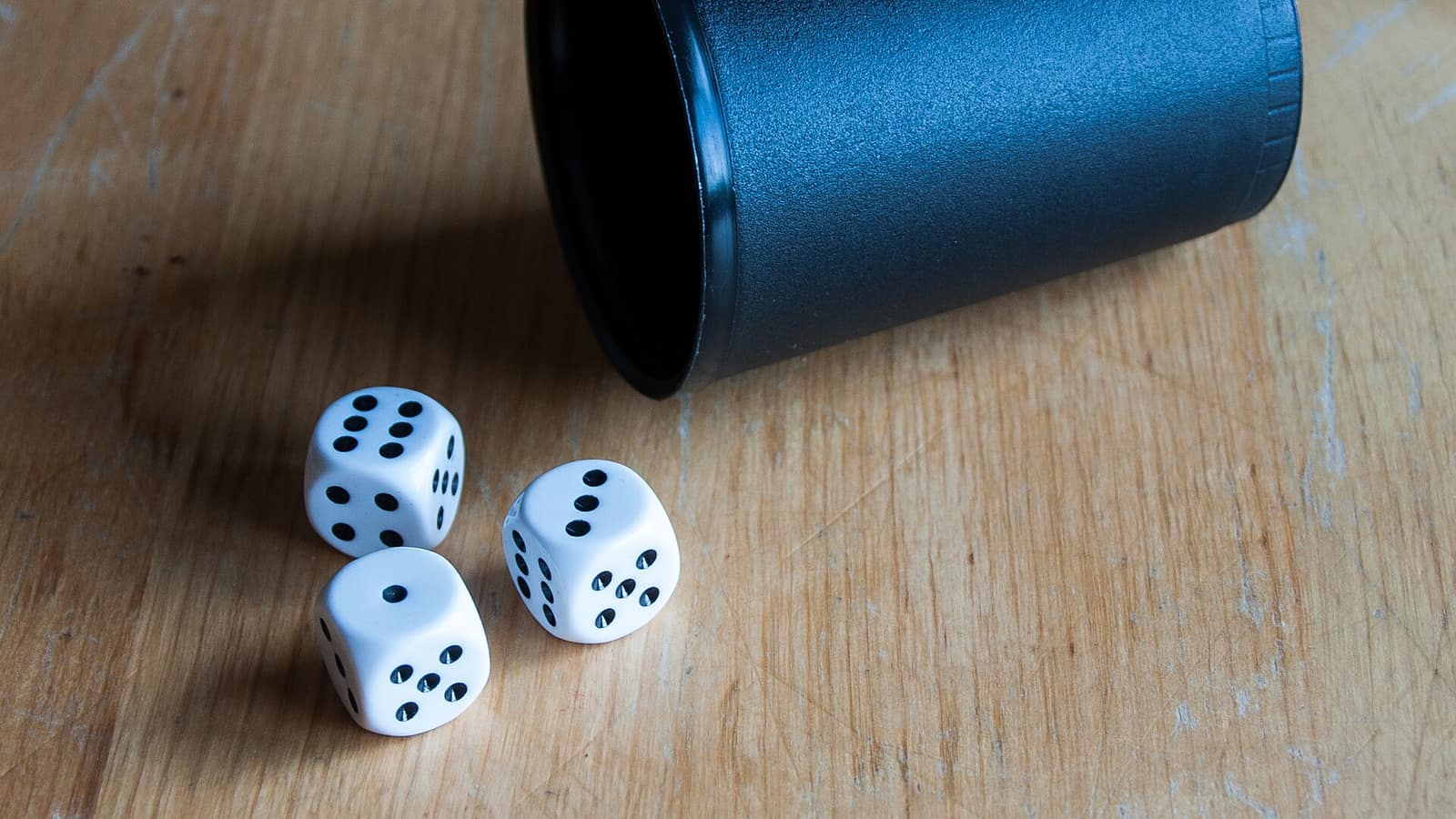
Three standard six-sided dice are rolled together. Live dealer games use a shaker or a cage, while RNG versions simulate three random dice. There are 216 possible outcomes, and every bet's odds come from counting how many of those 216 outcomes win.
Is sic bo the same as Hoo Hey How?
They are close relatives. Hoo Hey How, also called fish-prawn-crab, uses three dice with pictures instead of numbers. Sic bo uses numbered dice with a larger betting layout. Both are quick dice games with the same kind of bets, but the payouts differ by game.
Can I use a strategy to beat sic bo?
No. Every roll is independent and the house edge applies to each bet. A sensible plan is to stick to low-edge bets, keep stakes small and avoid chasing losses. Our house edge guide shows how sic bo compares with other casino games.
What is Super Sic Bo?
Super Sic Bo is a live game with random multipliers applied to some outcomes before the dice are rolled. Those multipliers increase the payout if the matching bet wins. The base rules are the same, though the paytable and house edge vary, so read the game's information panel first.